Our approach to responsible investing
We take material investment risks, including environmental, social and governance (ESG) risks, into account when investing on behalf of our members.
Our Responsible Investment Policy outlines our beliefs and approach to including ESG factors in our investment process.
Understanding ESG risks and opportunities helps us achieve our investment goals on behalf of members
As a Western Australian statutory authority, we operate within the State Government's policy framework, abide by legislative and regulatory requirements, and aim to align with industry best practice.
We believe ESG factors can impact long-term, risk-adjusted returns for our members. As such, it is important to understand and consider material ESG risks, which can have a negative impact, and opportunities, which can be positive, during our investment process.

Five years as an ESG Leader
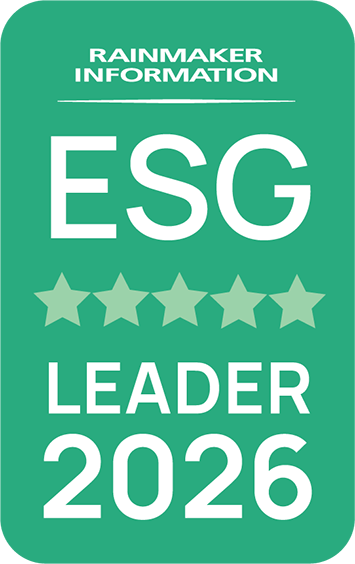
GESB has received the ESG Leader Award again in 2026, marking five consecutive years of recognition.
The Rainmaker ESG Leader Award is earned by Australia's best super funds that perform ESG principles to a high level, while having a track record of strong investment performance.
What ESG means for our investments
ESG factors are any environmental, social and governance considerations which have the potential to materially impact long-term investment returns.
Failure to consider ESG factors can lead to mispricing investment risk and poor investment decisions. Effective management of ESG issues comprises an important part of our investment strategy and reflects our Board's duty to consider the risks and opportunities associated with different kinds of investments.

Environmental
These are factors affecting the natural environment, including climate change.

Social
These are issues related to human and labour rights, including modern slavery.

Governance
These are factors impacting how companies or assets are run, including Board and management decisions, and auditing and reporting processes.
Our climate change commitment
The GESB Board has committed to transitioning our investment portfolio to net zero carbon emissions by 2050. This aligns with the goals of the Paris Agreement and Western Australian Climate Policy.
To support this goal, we have developed a Climate Change Transition Plan that outlines how we plan to reduce emissions across our investments and how we track our progress over time.
Our Modern Slavery Statement
When selecting and managing investments on behalf of members, we take into account how labour standards may financially affect the investment. Our investment managers assess this on a case-by-case basis and there is no predetermined view as to how this applies to all investments.
Read our Modern Slavery Statement to learn about the steps we're taking to address the risks of modern slavery in our supply chains and operation, including our investments.
How we integrate ESG into our investment process
We consider ESG factors during the following stages of the investment process.
When formulating our investment strategy, we identify and measure investment risk. By taking ESG risks into account, we aim to understand the impact of material risk, such as climate change, on investment performance.
We undertake annual stress testing and scenario analysis across our investment options to help understand and assess the potential impact that climate change may have on investment returns over time.
We acknowledge the importance of understanding ESG risks at portfolio level. We access a range of tools to measure and monitor the portfolio from an ESG perspective. We currently measure the carbon exposure in listed equities.
We expect our investment managers to identify, assess and manage material ESG risks and opportunities.
We review and assess our investment managers' approach to ESG regularly to ensure that portfolios are managed in a way that meets our requirements.
We believe effective stewardship plays an important role in improving investee companies' responsible investment practices and can enhance the long term, risk adjusted returns of investments.
We expect our investment managers to engage with investee companies and exercising voting rights on GESB’s behalf.
We undertake due diligence to ensure our Asset Consultant(s) have suitable expertise and capacity to evaluate investment managers' responsible investment capabilities.
Invest with a greater ESG focus
In addition to our whole-of-portfolio approach to responsible investing, we offer the Sustainable Balanced investment plan for members who would like to invest their super with a greater focus on ESG considerations.
The plan is available for GESB Super and West State Super members, and members with a Retirement Income Allocated Pension account.
Learn about our Sustainable Balanced plan
Our responsible investment policies
Read our Responsible Investment Policy to learn more about our responsible investing approach.
Read our Responsible Investment Policy
Proxy Voting Policy
Read our Proxy Voting Policy to find out our approach to voting on resolutions put to shareholder meetings of its investee companies. We consider this as part of our company engagement practices.
You can find the latest record of GESB's proxy voting activity here.
Related information
Learn more about ESG and your investments.

Sustainable Balanced plan's first year of success
Learn more about the planLearn how our Sustainable Balanced investment plan performed in its first year and how funds are being invested to help contribute to a more sustainable future.

Our climate change action
Find out moreLearn about the initial actions we’re taking to meet our goal of transitioning our investment portfolio towards net zero carbon emissions by 2050.

How we work with our investment managers
Find out moreInvesting in Australia and overseas is complex - so we use professional investment managers. Learn about our managers and how they invest your super for the long term.
Thank you for printing this page. Remember to come back to gesb.wa.gov.au for the latest information as our content is updated regularly. This information is correct as at 27 October 2026.